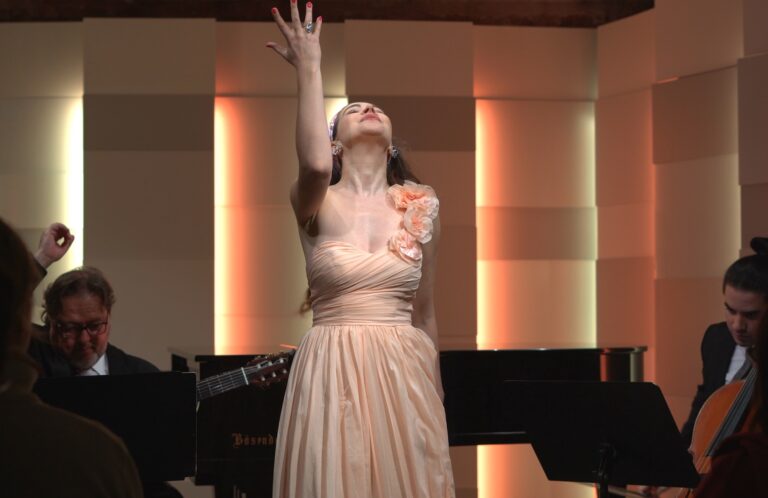
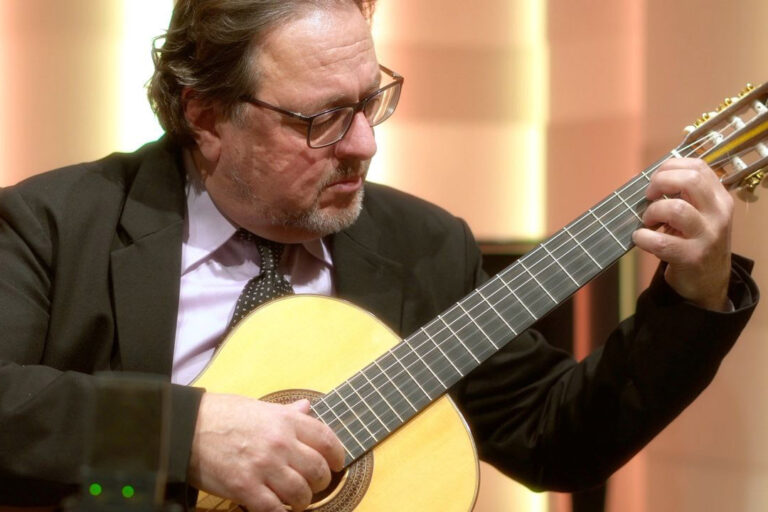
“Ihcuac Tlaneci” is a composition by the Mexican composerSalvador Moreno. The work is based on and refers to the poetry of pre-Hispanic Mexican culturesAztec Cosmology, especially on the theme of sunrise and the beginning of a new day. The title means onNahuatl like “When the sun rose”. Moreno, known for its combination of Mexican traditions and modern music, uses traditional instruments and elements of indigenous music in this piece, to illustrate the Aztecs' spiritual connection to nature and the cosmos.
Ihcuac Tlaneci – Salvador Moreno
Patricia Trujano Granados – soprano
Andreas Wagner – piano
Alexander Uhl – Video
“Ihcuac Tlaneci” is a fascinating work by the Mexican composerSalvador Moreno (1916–1999), that impressively expresses Mexico's cultural roots. The title of the piece means onNahuatl, the language of the Aztecs, “When the sun rose”, which refers to the sunrise and the beginning of a new day. This topic is deep in theAztec cosmology rooted, in which the daily cycle of the sun played a central role. The work is both a musical and a spiritual experience, that reinterprets the old traditions of Mexican civilizations in a modern form.
Background and inspiration
Salvador Moreno was not just a composer, but also writers and musicologists. Throughout his life he showed great interest in the pre-Hispanic cultures of Mexico and their rich mythology. This interest is also reflected in “Ihcuac Tlaneci”., that on theindigenous Poems and the Aztec idea of the cosmic circle of life. The Aztecs believed, that the gods would have to recreate the sun again and again, to make life on earth possible, which made the sunrise a moment of deep meaning. Moreno takes up this symbolism and translates it musically.
Musical structure and elements
The composition is characterized by a clever fusion of traditional Mexican music and modern compositional techniques. Moreno usesindigenous instruments, like drums and flutes, which were used in pre-Hispanic music, and integrates them into a contemporary musical framework. The rhythms and melodies of the composition are reminiscent of ceremonial music and create an atmosphere of ritual and mysticism.
A central element of the composition is the alternation between stillness and movement, which reflects the gradual transition from the darkness of the night to the light of the morning. The constant flow of life is represented through recurring motifs and rhythmic variations, as it was understood in Aztec culture.
Meaning and influence
“Ihcuac Tlaneci” is not only a homage to the pre-Hispanic cultures of Mexico, but also an attempt, to reconcile modern Mexican identity with its indigenous roots. Salvador Moreno is one of the composers, the one in the middle of the 20. century tried, Expressing national identity through music, by drawing on the country's rich cultural past.
The work has been performed and contributed both in Mexico and internationally, to revive interest in the pre-Hispanic musical tradition. Moreno contributed with compositions such as “Ihcuac Tlaneci”., to place these sounds and ideas in a modern context and make them accessible to a wider audience.
“Ihcuac Tlaneci” is a significant example of this, how music can act as a bridge between the past and the present. Salvador Moreno succeeds in this work, to unite the spiritual and cultural depth of the Aztec worldview with the means of modern music. In doing so he creates a work, which is both musically impressive and of deep cultural and historical value.